Tarantism – When Music Takes Care of the Soul (2)

Tarantism is the story of a singular magic-religious ritual that has his roots in Apulia, a region in the southernmost part of Italy. Discovering it is essential to learn about a great history of traditions that have characterized most of that area.
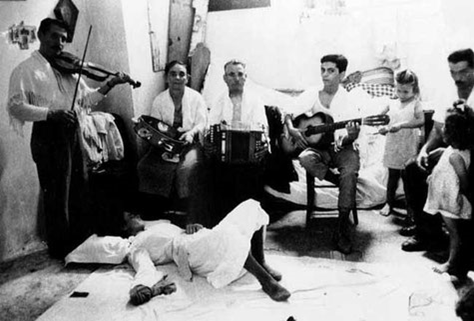
This ritual was based on a musical and dance ceremonial that helped people, especially women, affected by convulsive hysterical manifestations that popular beliefs attributed to the bite of the tarantula, a spider. Historically, it was believed that this curious exorcism performed by the endless melody of accordions and tambourines could eliminate the poison from the soul and body of the woman.

Therefore, if an unlucky woman, while collecting tobacco from the fields, was bitten by a spider, the whole population had to immediately gather the citizens capable of playing, because the music was considered the only medicine necessary to save her life. The concept was that the tarantulata (i.e. the sick woman), listening to the melody, felt the desire to dance to drive away the evil.

About the dance, it took place in two substantial phases: firstly, the woman was on the ground and moved her body personifying the spider; secondly, she stood up and experienced the conflict with the spider mimicking a pursuit that ended when the woman finally crushed the evil under her feet.
With the improvement of medicine, these ancient practices have disappeared. However, it is evident that the new generations that inhabit that area are still very proud of their historical roots.

Nowadays, some expressive modalities typical of this ritual system have been recovered by some musical groups and cultural associations, in a movement of re-appropriation of the original traditions and dance forms that found strong feedback from the public. Its main expressive mode is the tarantella, still very popular today. Indeed, every year the Apulian region organizes “La Notte della Taranta” – a folk music festival whose goal is to celebrate and enhance traditional music and dances.

In conclusion, according to the mayor of Melpignano, the village where the festival takes place, tradition must not represent an “antique object” that is increasingly forgotten; rather, we should celebrate the past to build a future that does not lose its identity. That is the reason why the current form of Tarantella is still so popular and escapes the grip of time, bringing the different generations together.

Bojack Horseman – When a Horse Understands You Better than Humans (1)

Bojack Horseman had undoubtedly become the number one series of 2010, as its countless prizes and nominations testify. What differentiated this series from the others was its ability to reflect the dramas of today’s society, although this is an animated show and the characters are animal. It doesn’t matter if you’re in your teenage years or in your 30s, everyone can relate to the characters of the show, from the NEET to the overwhelmed office worker.

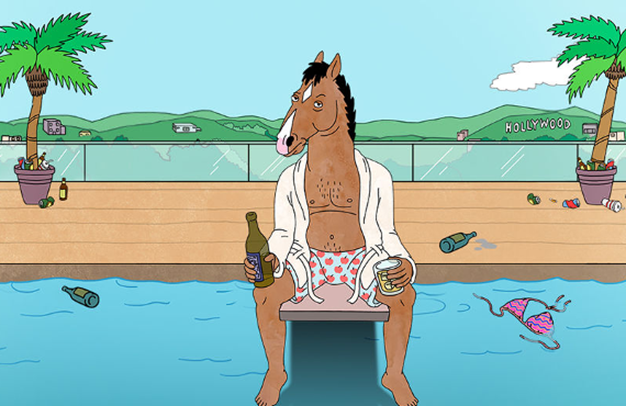
Bojack is a middle-aged star of the fictional 80s’ sitcom “Horsin’ Around”, forgotten by most of the people living in “Hollywoo”, the frenetic depiction of the real-life capital of showbiz. Our narcissistic horse moves throughout the series in a never-ending quest for finding his meaning, ruining the life of everyone who tries to be helpful. Diane, Princess Carolyn, Todd and even his “daughter” are pulled by Bojack into a spiral of self-commiseration, anxiety and a sense of unaccomplishment, which ultimately forces them to confront their own problems. It’s already clear from the first few episodes that the brilliantly written plot will guide the spectator into a stream of emotions and feelings built on the contradictions of our society.

Indeed, capturing the various nuances of the TV series, we can have different ­­­representations of our modern world and its dynamics. Our society is chained to the myths created by both mass and social media, providing inaccurate models and an overall superficial attitude. The consequences are clear: the race for fake models of perfection is the first cause of growth in the rate of depression and anxiety,
especially for the generation that has “grown up” with mass media. In spring 2017, 40% of students said that at least once they felt so depressed that it was difficult for them to function, and 61% of them said they had “felt overwhelming anxiety” in the same time period, according to an American College Health Association survey of more than 63,000 students at 92 schools.

Therefore, following Bojack dealing with his ­­­­­alcoholism, and peeking inside the life of his teenage “daughter” struggling to look perfect on her Instagram account, we can have different ­­­representations of various generations that make up our world full of contradictions.

Bojack Horseman is not just entertainment: there’s much more going on. A series like this seems to be the long-awaited satirical response to the need of sensitization about mental health issues. Feeling so realistic and entertaining, this product could be regarded as a ground-breaking entry in the panorama of TV shows, a future masterpiece that nobody should miss.